





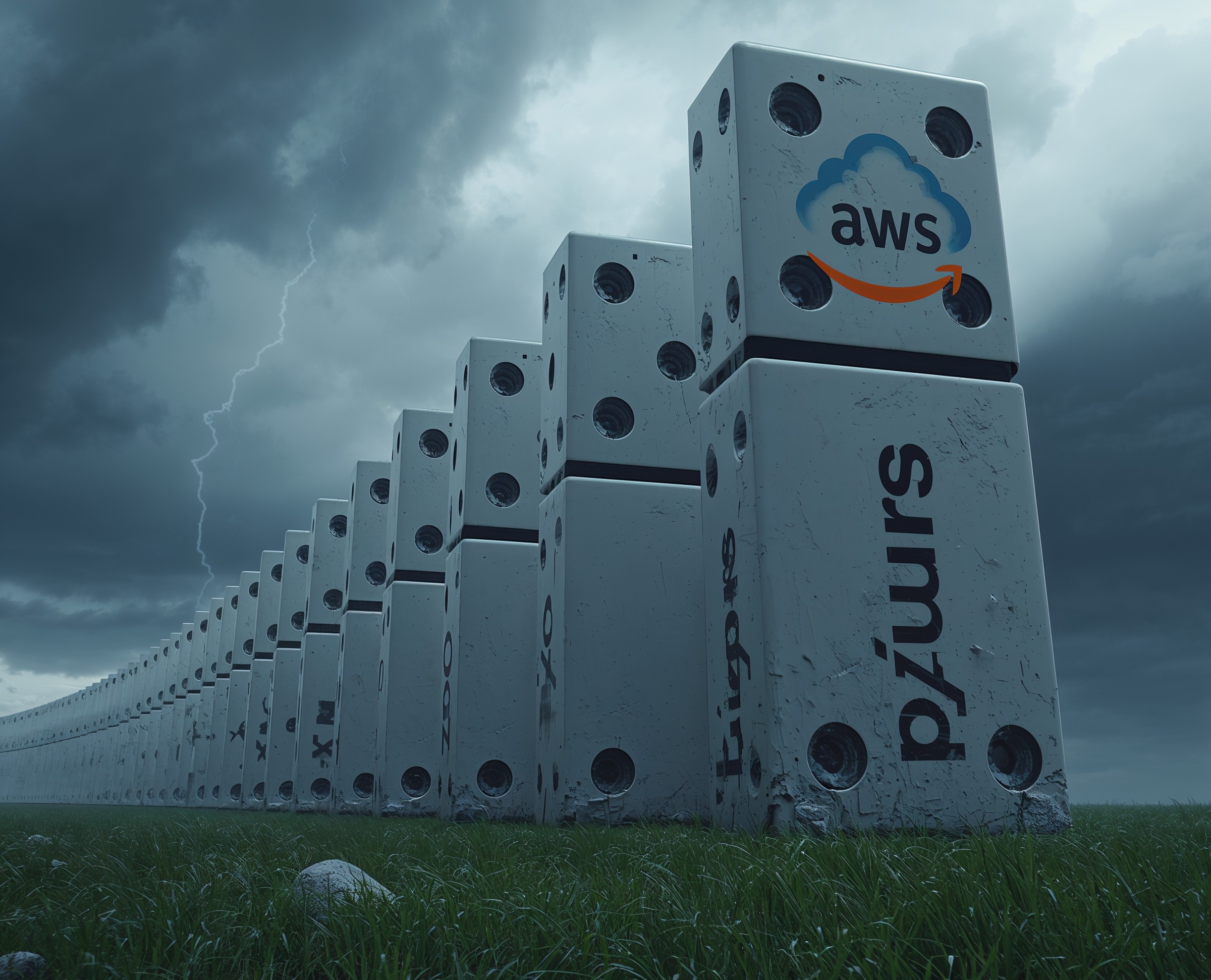
Over four weeks in October and November 2025, the internet took three heavy hits. First, an AWS outage in US-EAST-1 triggered DNS failures that rippled through thousands of services. Less than two weeks later, a configuration change in Microsoft’s Azure Front Door CDN brought global Microsoft and customer workloads to a halt. Finally, a Cloudflare incident on November 18 turned a single overgrown configuration file used by its bot-management system into a global disruption that knocked major sites offline.
At first glance, the incidents look unrelated: different vendors, different services, different triggers. However, seen together, they draw a clear Cloudflare–Azure–AWS outage pattern. In each case, the blast radius came not from DDoS attacks or capacity exhaustion, but from internal configuration and metadata failures in the core of modern cloud infrastructure.
For teams responsible for availability, security and resilience, these outages now read less like random glitches and more like a cloud outage cluster that exposes how deeply the web depends on a small number of tightly coupled platforms.
𝗙𝗿𝗼𝗺 “𝗮𝗻𝗼𝘁𝗵𝗲𝗿 𝗼𝘂𝘁𝗮𝗴𝗲” 𝘁𝗼 𝗮 𝗰𝗹𝗼𝘂𝗱 𝗼𝘂𝘁𝗮𝗴𝗲 𝗰𝗹𝘂𝘀𝘁𝗲𝗿
The AWS incident on October 20 started with DNS issues inside the US-EAST-1 region. A faulty piece of automation corrupted internal DNS records for DynamoDB endpoints, which in turn broke service discovery for many AWS services. As resolution failed, outages cascaded through consumer apps, collaboration tools and banking services, putting millions of users in the dark for hours.
On October 29, Azure experienced global downtime when a configuration change to Azure Front Door caused nodes across its CDN fleet to fail to load correctly. The disruption affected Microsoft 365, Xbox Live, Minecraft and airline systems, among many others. Microsoft ultimately traced the incident to an inadvertent configuration update tied to its global edge.
Then, on November 18, Cloudflare’s own post-incident analysis revealed that a database permissions change caused a feature file used by its Bot Management system to grow far beyond expected limits. When the oversized file propagated, core traffic-handling software crashed across the network, triggering HTTP 5xx errors worldwide.
Individually, each outage has its own root cause. Together, they draw an uncomfortable line: Cloudflare, Azure and AWS all suffered failures that began with internal configuration or metadata logic and then cascaded through heavily automated control planes.
𝗔 𝗰𝗶𝗿𝗰𝘂𝗹𝗮𝗿 𝗱𝗲𝗽𝗲𝗻𝗱𝗲𝗻𝗰𝘆 𝗺𝗮𝗰𝗵𝗶𝗻𝗲: 𝘄𝗵𝗲𝗻 𝗰𝗹𝗼𝘂𝗱𝘀 𝗿𝘂𝗻 𝗼𝗻 𝗼𝘁𝗵𝗲𝗿 𝗰𝗹𝗼𝘂𝗱𝘀
Modern infrastructure no longer looks like a stack of independent layers. Instead, it behaves much more like a circular dependency machine. Cloud platforms rely on DNS. DNS-control systems often run on those same clouds or on peer providers. Identity and access management build on both. CDNs and security layers span across all of them.
Because of this, a small misconfiguration in any one layer rarely stays small. A DNS automation bug in a single AWS region impacts DynamoDB control planes, which then affects Lambda, API Gateway and upstream applications. A bad Azure Front Door configuration instantly ripples across global load balancing and CDN paths. A Cloudflare feature file that grows beyond expected size turns into a global crash in traffic-handling software used by countless downstream services.
Because these components sit at the foundation of so many services, the default blast radius has quietly become global. The cloudflare–azure–aws outage pattern shows how quickly errors in foundations propagate into outages far above them often in services that never chose that provider directly, but rely on downstream SaaS, APIs or CDNs that do.
𝗖𝗹𝗼𝘂𝗱𝗳𝗹𝗮𝗿𝗲, 𝗔𝘇𝘂𝗿𝗲, 𝗔𝗪𝗦: 𝗰𝗼𝗻𝗳𝗶𝗴𝘂𝗿𝗮𝘁𝗶𝗼𝗻 𝗮𝗻𝗱 𝗺𝗲𝘁𝗮𝗱𝗮𝘁𝗮 𝗮𝘀 𝘁𝗵𝗲 𝗰𝗼𝗺𝗺𝗼𝗻 𝘁𝗵𝗿𝗲𝗮𝗱
Although each provider published different technical details, a shared theme runs through all three incidents.
Cloudflare linked its outage to an internal change that altered database permissions, which then caused duplicate entries in a configuration file for its Bot Management system. When that file exceeded expected size, the software that processes it crashed across many locations.
Azure attributed its October 29 disruption to an inadvertent configuration change in Azure Front Door. That change prevented nodes across its global fleet from loading correctly, which degraded or broke services dependent on the CDN and global load-balancing layer.
AWS, in turn, identified faulty automation in its internal DNS management for DynamoDB endpoints in US-EAST-1. When the DNS records failed in that core region, services that relied on DynamoDB struggled or failed, and the outage quickly spread to a wide range of applications across tens of countries.
In every case, internal changes in highly automated control systems config files, metadata stores, DNS logic—triggered failures that reached far beyond the initial technical fault. None of the three incidents stemmed from classical DDoS patterns or straightforward capacity exhaustion.
𝗦𝗲𝗮𝘀𝗼𝗻𝗮𝗹 𝗹𝗼𝗮𝗱, 𝗔𝗜 𝘁𝗿𝗮𝗳𝗳𝗶𝗰 𝗮𝗻𝗱 𝘁𝗵𝗲 “𝗻𝗲𝘄 𝗽𝗼𝘄𝗲𝗿 𝗰𝘂𝘁𝘀” 𝗺𝗲𝘁𝗮𝗽𝗵𝗼𝗿
All three outages landed in the same season. They arrived just as pre-holiday load increased, AI-driven traffic ramped up and API usage grew across consumer and enterprise applications. None of the official post-incident reviews presented seasonal load as the root cause. However, persistent high-load conditions exposed latent faults: bugs that only trigger once a system crosses a particular threshold in input size, metadata volume or configuration complexity.
That behaviour increasingly resembles how power grids fail. A grid can operate for years under normal conditions, yet a combination of high demand and a small control-plane defect can cascade into large-scale outages. Cloud infrastructures now sit in a similar regime:
– they run with extreme automation,
– they sit under heavy, always-on background load, and
– they concentrate traffic from thousands of organisations on top of a small number of providers.
As a result, configuration and metadata issues have become the “new power cuts” for the internet—rare enough that people still treat them as news, yet structural enough that teams must plan for them as part of normal resilience strategy.
𝗖𝗹𝗼𝘂𝗱 𝗰𝗲𝗻𝘁𝗿𝗮𝗹𝗶𝘀𝗮𝘁𝗶𝗼𝗻: 𝘄𝗵𝗲𝗻 𝗮 𝗳𝗲𝘄 𝗽𝗿𝗼𝘃𝗶𝗱𝗲𝗿𝘀 𝗱𝗲𝗳𝗶𝗻𝗲 𝘆𝗼𝘂𝗿 𝗿𝗶𝘀𝗸
Today’s web leans heavily on a short list of hyperscale providers for compute, storage, DNS, CDN, identity and security. Analysts and regulators have already flagged cloud concentration as a systemic risk, especially when many firms and critical services share the same underlying vendors.
The Cloudflare–Azure–AWS outage pattern shows how that concentration behaves under stress. A single AWS region fault affects consumer apps, banking portals and enterprise SaaS at the same time. An Azure Front Door misconfiguration degrades workloads for airlines, gaming platforms and Microsoft’s own productivity suite. A Cloudflare configuration issue instantly impacts government portals, transport services and major consumer brands.
Because so many organisations ride on the same foundations, they effectively share a single failure domain they do not directly control. Even those that avoid a particular provider often depend on SaaS, partners or upstream suppliers that do not.
𝗪𝗵𝗮𝘁 𝘁𝗵𝗲 𝗼𝘂𝘁𝗮𝗴𝗲 𝗽𝗮𝘁𝘁𝗲𝗿𝗻 𝗺𝗲𝗮𝗻𝘀 𝗳𝗼𝗿 𝗜𝗧, 𝗦𝗥𝗘 𝗮𝗻𝗱 𝘀𝗲𝗰𝘂𝗿𝗶𝘁𝘆 𝘁𝗲𝗮𝗺𝘀
From an operational point of view, these incidents challenge several comfortable assumptions. It is no longer safe to assume that:
– a single cloud provider, or single region, can deliver uninterrupted foundational services,
– identity, DNS and control planes always remain available while you troubleshoot application-level issues, or
– outages are primarily a pure availability problem rather than a security-relevant event.
Every large outage now creates an environment where monitoring degrades, dashboards flood with partial errors, teams rush configuration changes and users generate noisy complaints across multiple channels. Under those conditions, attackers gain cover for lateral movement, fraud or data theft.
Therefore, security and SRE teams should treat a cloud outage cluster not only as an availability scenario but as a high-risk operational state that deserves its own playbooks, alerting and containment logic.
𝗕𝗲𝘆𝗼𝗻𝗱 𝗯𝘂𝘇𝘇𝘄𝗼𝗿𝗱𝘀: 𝗽𝗿𝗮𝗰𝘁𝗶𝗰𝗮𝗹 𝗿𝗲𝘀𝗶𝗹𝗶𝗲𝗻𝗰𝗲 𝗺𝗼𝘃𝗲𝘀 𝗮𝗳𝘁𝗲𝗿 𝘁𝗵𝗲 𝗖𝗹𝗼𝘂𝗱𝗳𝗹𝗮𝗿𝗲–𝗔𝘇𝘂𝗿𝗲–𝗔𝗪𝗦 𝗼𝘂𝘁𝗮𝗴𝗲𝘀
Multi-cloud slogans do not automatically translate into resilience. In practice, teams need clear failure modes and realistic expectations. After this outage pattern, several strategies stand out.
First, design for graceful degradation. Critical services should not jump directly from “fully available” to “completely offline” because a single cloud component fails. Instead, they should degrade to reduced functionality where possible read-only modes, limited regions, or degraded features that keep core workflows alive.
Second, use multi-region and where the business case supports it, multi-cloud for truly essential services, but only with tested failover paths. A second provider or region adds value only when teams can actually operate from it under stress.
Third, keep at least some “cold” or offline failover options for business-critical processes: payment processing fallbacks, manual override procedures, or out-of-band communication channels that do not depend on a single cloud.
Finally, treat configuration and metadata systems as critical infrastructure. That means change-control, blast-radius limits, canarying, and rollback plans that treat internal control planes with the same caution you reserve for user-facing production deployments.
𝗚𝗼𝘃𝗲𝗿𝗻𝗮𝗻𝗰𝗲 𝗮𝗻𝗱 𝗿𝗶𝘀𝗸: 𝘁𝘂𝗿𝗻𝗶𝗻𝗴 𝗼𝘂𝘁𝗮𝗴𝗲 𝘀𝘁𝗼𝗿𝗶𝗲𝘀 𝗶𝗻𝘁𝗼 𝗮𝗰𝘁𝗶𝗼𝗻𝗮𝗯𝗹𝗲 𝗹𝗲𝘀𝘀𝗼𝗻𝘀
At the governance level, the cloudflare–azure–aws outage pattern reinforces the idea that large providers represent concentrated infrastructure risk, not just routine IT vendors. Financial stability bodies and regulators have already warned about cloud concentration as a systemic issue; the recent outages supply concrete, public examples of what that looks like in practice.
Boards and risk committees should therefore:
– classify hyperscale providers and critical CDNs as strategic infrastructure dependencies,
– ensure third-party risk frameworks explicitly model cloud outage cascades, and
– demand regular exercises where core identity, DNS or CDN layers fail during peak-demand or high-stakes events.
When organisations treat these incidents as structural signals rather than one-off embarrassments for individual vendors, they can adjust architectures, contracts and runbooks before the next outage cluster appears.
𝗖𝗼𝗻𝗳𝗶𝗴𝘂𝗿𝗮𝘁𝗶𝗼𝗻 𝗮𝘀 𝘁𝗵𝗲 𝗻𝗲𝘄 𝗴𝗿𝗶𝗱 𝗳𝗮𝘂𝗹𝘁
The sequence of AWS, Azure and Cloudflare incidents does not prove that the cloud “doesn’t work.” Instead, it shows that the cloud now behaves like critical infrastructure whose failures resemble grid faults more than simple server crashes. Internal changes to DNS automation, CDN configuration or feature-file pipelines can knock out large portions of the internet because those systems sit at the base of so many dependency chains.
Going forward, teams that treat configuration and metadata systems as production-critical, that recognise cloud centralisation as a genuine risk factor and that prepare for cloud outage clusters rather than isolated events will stand a better chance of riding out the next wave of failures with less damage.
𝗙𝗔𝗤𝗦
𝗪𝗵𝘆 𝗱𝗼 𝘁𝗵𝗲 𝗖𝗹𝗼𝘂𝗱𝗳𝗹𝗮𝗿𝗲, 𝗔𝘇𝘂𝗿𝗲 𝗮𝗻𝗱 𝗔𝗪𝗦 𝗼𝘂𝘁𝗮𝗴𝗲𝘀 𝗹𝗼𝗼𝗸 𝗹𝗶𝗸𝗲 𝗮 𝗽𝗮𝘁𝘁𝗲𝗿𝗻?
All three occurred within weeks of each other, affected large portions of the internet and stemmed from internal control-plane issues DNS automation in AWS, a Front Door configuration error in Azure and a mis-handled configuration file in Cloudflare’s bot-management system. Together they reveal how configuration and metadata failures can behave like systemic infrastructure faults.
𝗪𝗲𝗿𝗲 𝘁𝗵𝗲𝘀𝗲 𝗼𝘂𝘁𝗮𝗴𝗲𝘀 𝗰𝗮𝘂𝘀𝗲𝗱 𝗯𝘆 𝗰𝘆𝗯𝗲𝗿𝗮𝘁𝘁𝗮𝗰𝗸𝘀?
No public post-incident reports attribute these outages to external attacks. AWS linked its event to an internal DNS automation defect, Azure pointed to a configuration change in Azure Front Door and Cloudflare described a configuration file that grew beyond expected size limits after a permissions change.
𝗛𝗼𝘄 𝗱𝗼𝗲𝘀 𝗰𝗹𝗼𝘂𝗱 𝗰𝗲𝗻𝘁𝗿𝗮𝗹𝗶𝘀𝗮𝘁𝗶𝗼𝗻 𝗺𝗮𝗴𝗻𝗶𝗳𝘆 𝘁𝗵𝗲𝘀𝗲 𝗳𝗮𝗶𝗹𝘂𝗿𝗲𝘀?
Because a handful of providers host and deliver services for thousands of organisations, a single incident can impact banks, retailers, gaming platforms, government portals and SaaS vendors simultaneously. That concentration turns what might once have been a local data-centre issue into a global event.
𝗪𝗵𝗮𝘁 𝗰𝗮𝗻 𝗼𝗿𝗴𝗮𝗻𝗶𝘀𝗮𝘁𝗶𝗼𝗻𝘀 𝗱𝗼 𝘁𝗼 𝗿𝗲𝗱𝘂𝗰𝗲 𝗿𝗶𝘀𝗸 𝗳𝗿𝗼𝗺 𝘁𝗵𝗶𝘀 𝗼𝘂𝘁𝗮𝗴𝗲 𝗽𝗮𝘁𝘁𝗲𝗿𝗻?
They can design applications for graceful degradation, rely on tested multi-region or multi-cloud strategies where appropriate, maintain offline or manual failover options and treat configuration systems as critical components with strict change control and blast-radius limits. They should also include major provider outages in tabletop exercises.
𝗪𝗵𝘆 𝗱𝗼 𝘁𝗵𝗲𝘀𝗲 𝗼𝘂𝘁𝗮𝗴𝗲𝘀 𝗺𝗮𝘁𝘁𝗲𝗿 𝗳𝗼𝗿 𝘀𝗲𝗰𝘂𝗿𝗶𝘁𝘆 𝗮𝘀 𝘄𝗲𝗹𝗹 𝗮𝘀 𝗮𝘃𝗮𝗶𝗹𝗮𝗯𝗶𝗹𝗶𝘁𝘆?
Large outages degrade monitoring, create pressure for rapid changes and generate noise that attackers can exploit. Treating multi-provider outages as security-relevant scenarios helps teams watch for opportunistic intrusions, fraud or data exposure while they manage recovery.