





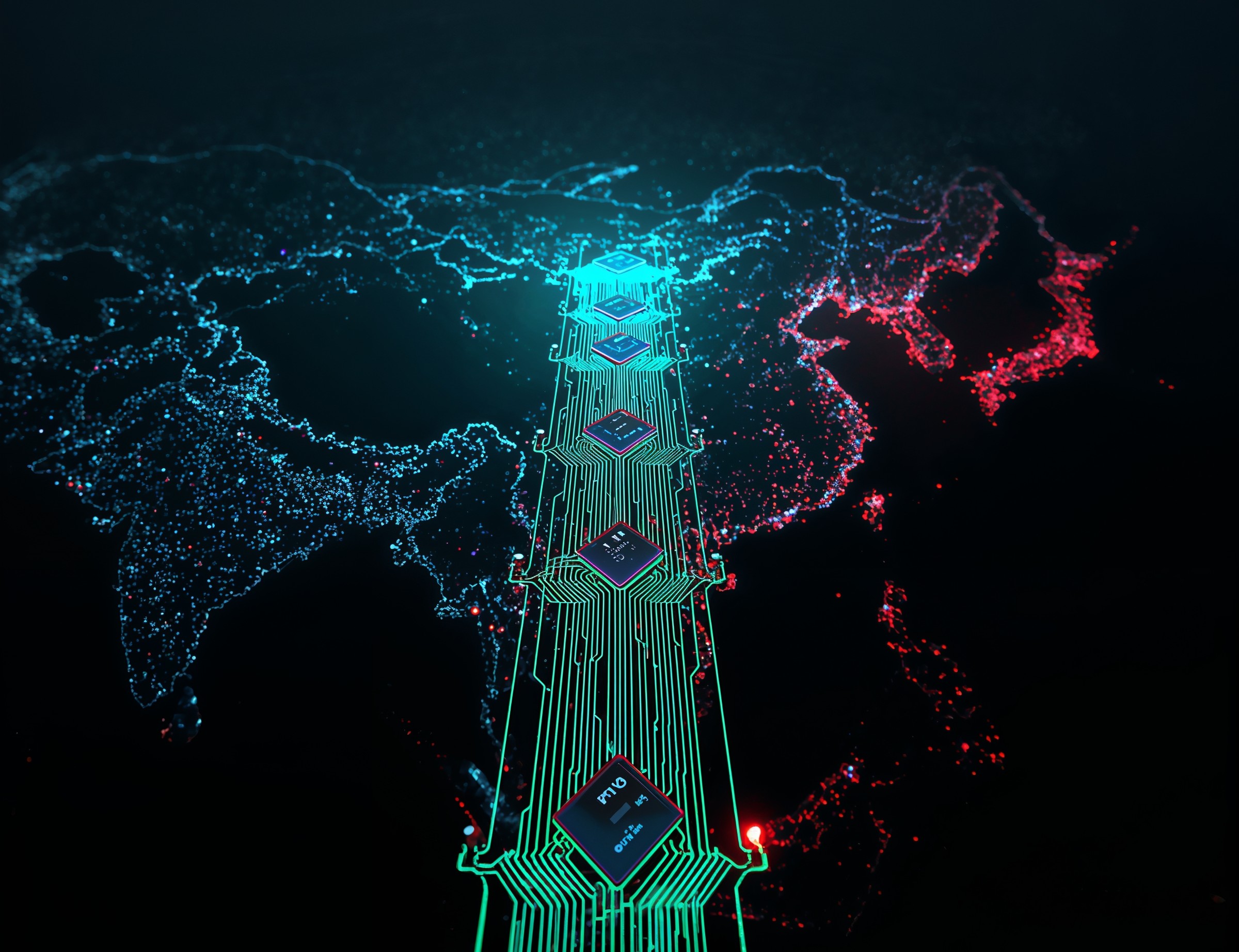
The White House is weighing whether to let Nvidia resume shipments of its powerful H200 AI GPUs to China, just weeks after President Donald Trump vowed to keep the company’s most advanced chips exclusively on US soil.
Sources familiar with internal talks say the Commerce Department is reviewing a change that would allow exports of H200 accelerators under a revised licensing policy, following a Trump–Xi trade truce in Busan. The move would reopen a Chinese data-center market that once contributed roughly a quarter of Nvidia’s data-center revenue but has since collapsed to near zero under tightened controls.
However, the timing raises obvious questions. The potential policy shift landed one day after prosecutors unsealed an indictment charging four men with trying to smuggle A100, H100 and H200 GPUs, along with HP supercomputers, into China—exactly the kind of diversion US lawmakers say justifies tougher tracking of advanced AI chips.
As a result, export controls on the H200 now sit at the center of a much larger argument over US national security, AI supremacy and how far Washington should go to protect its edge without permanently abandoning one of the world’s largest markets.
What makes Nvidia’s H200 so sensitive?
The H200 GPU belongs to Nvidia’s Hopper family, sitting above the widely deployed H100 in memory capacity and bandwidth. Nvidia pitches it as a workhorse for training and running large language models, recommender systems and high-end scientific computing.
Compared with the H100, the H200 doubles on-board high-bandwidth memory and pushes total bandwidth into multi-terabyte-per-second territory, which makes it especially attractive for very large AI models that hammer memory and I/O. The US previously treated this level of performance as “cutting-edge AI technology” under the Export Control Reform Act (ECRA), placing the H200 in the bucket of chips that should not reach foreign adversaries without a license.
By contrast, China currently receives only downgraded products such as the H20 and RTX Pro 6000D—parts Nvidia designed to sit just below US performance thresholds. Those chips remain several notches below the H200 in capability, which is precisely why Beijing wants the real thing and why US hawks see any relaxation as a gift to Chinese AI labs and defense contractors.
From “no way” on Blackwell to “maybe” on H200
Earlier this month, Trump drew a hard line around Nvidia’s next-generation Blackwell chips, telling reporters that he would not allow those top-tier GPUs to reach China or “other people” outside the United States. That stance fit a broader pattern: the administration had already blocked H-class shipments, then allowed some stripped-down variants like H20, and more recently framed export controls as a lever in trade talks.
The H200 debate reflects that tension. On one hand, Trump has repeatedly promised to keep the most advanced AI compute inside the US. On the other, the Commerce Department now appears willing to consider licenses for a chip that many engineers see as only one rung below Nvidia’s current flagship.
Industry analysts note that Nvidia faces growing competition from US rivals and from Chinese vendors such as Huawei, which are racing to fill the compute vacuum left by export bans. Allowing some H200 sales could hand Nvidia billions in revenue while Washington keeps even more capable Blackwell-class parts ring-fenced for domestic use.
Smuggling case shows how leaky the current system already is
While officials debate H200 licenses, the latest indictment illustrates how determined buyers already work around existing rules. Prosecutors accuse two US citizens and two Chinese nationals of using a shell real-estate company, fake contracts and false customs paperwork to funnel restricted Nvidia GPUs and AI-ready HP supercomputers toward Chinese customers via Malaysia and Thailand.
According to court filings, the group successfully moved hundreds of A100 accelerators before investigators intervened, and they allegedly attempted to push H100s, H200s and ten GPU-equipped supercomputers through the same network. If convicted on export control, smuggling and money-laundering charges, they each face decades in prison.
For lawmakers, the case proves that traditional export controls and paperwork checks cannot fully prevent advanced chips from reaching blacklisted destinations. The US House Select Committee on the Chinese Communist Party responded by demanding rapid passage of the bipartisan CHIP Security Act, which would force AI-grade semiconductors to ship with built-in location-tracking and tamper-resistant reporting mechanisms.
Supporters argue that such “trackable AI chips” offer the only realistic way to monitor where these processors actually operate once they leave US factories. Critics warn that mandatory tracking would create new privacy questions, supply-chain costs and a juicy surveillance target for state and criminal actors.
Lawmakers see a direct line from data centers to drones and surveillance
Export-control hawks do not frame Nvidia’s H200 as just a data-center part. They tie it directly to the rise of AI-enabled weapons and mass-surveillance systems. US and Ukrainian investigators have already found Nvidia Jetson Orin modules and other US-origin compute hardware inside autonomous Russian attack drones and other battlefield systems, despite formal restrictions on high-end exports to Moscow.
Those findings fuel arguments that advanced GPUs sold for “commercial” cloud workloads soon bleed into military, intelligence and censorship use cases. The same high-throughput accelerators that train recommendation engines can also optimise swarming drones, accelerate weapons design or power real-time biometric tracking in Xinjiang-style security architectures.
Supporters of a narrow Trump-era opening for H200 shipments counter that Washington can mitigate risk by:
– walling off truly top-end chips such as Blackwell from all foreign sales,
– enforcing strict end-user and end-use checks on Chinese licensees, and
– combining physical controls with the kind of location-verification schemes proposed in the CHIP Security Act.
However, even some export-control experts who sympathise with industry worry that any move to relax H200 restrictions will signal to allies and adversaries that US red lines on AI hardware are negotiable whenever commercial pressure builds.
Why China still wants Nvidia, even as it pushes domestic chips
Beijing officially denounces US export controls as an attempt to “weaponise” trade and slow Chinese innovation. At the same time, Chinese regulators have ordered major tech companies to stop ordering Nvidia’s China-specific H20 parts and launched customs crackdowns on high-end GPU imports moves designed both to reduce dependence on US hardware and to close loopholes that let smuggled chips in under the radar.
Yet top Chinese AI labs and hyperscalers still treat Nvidia as the benchmark. Domestic accelerators have improved quickly, but they often lag in performance, ecosystem maturity and software support. That gap explains why Chinese buyers spent years hunting for A100s and H100s through grey markets even after formal bans took effect.
From Beijing’s perspective, a narrowly tailored US decision to allow H200 imports would relieve short-term pressure on critical AI workloads and buy time for domestic chip houses to catch up. From Washington’s perspective, the same decision could either stabilise a fragile tech truce or undercut years of effort to slow China’s march toward AI-enabled military parity.
Is a limited H200 export opening compatible with US security goals?
In practice, any shift on H200 exports will likely hinge on how the administration answers three questions.
First, can Washington credibly ring-fence Blackwell-class chips and future generations while letting a “near-top” product like H200 flow to China? If not, today’s exception may become tomorrow’s baseline, especially once other allies and competitors follow suit.
Second, can US agencies combine licensing, location tracking and on-the-ground intelligence to monitor where exported H200s actually end up? The recent smuggling case suggests that bad actors already know how to exploit weak points in the system.
Third, does the strategic benefit of keeping Nvidia healthy and globally competitive outweigh the risk that Chinese companies will use H200-class compute to accelerate projects that run directly against US interests? Nvidia has openly warned that forcing it out of China entirely will simply hand the market to fast-moving local rivals.
Until the White House publishes a clear, durable framework that answers those questions, any hint of a Trump Nvidia H200 China policy pivot will keep investors hopeful, security hawks alarmed and allies uncertain about where US export-control doctrine really stands.
One chip, two narratives
To Nvidia, reopening H200 exports to China looks like a pragmatic correction after over-shooting on restrictions that crushed a crucial revenue stream. To many in Congress and the export-control community, it looks like a security gamble that arrives just as smuggling cases, battlefield evidence and new legislation highlight how valuable these chips have become for rival militaries and surveillance states.
Whether the administration ultimately signs off or backs away, this H200 debate makes one thing clear: advanced AI accelerators are no longer just high-margin products. They now sit at the fault line between commercial ambition, alliance politics and the hard limits Washington is willing to impose on China’s access to compute.
FAQS
What exactly is changing in US policy around Nvidia’s H200 exports to China?
The Trump administration is considering a shift that would let Nvidia sell H200 AI chips to Chinese customers under a revised licensing framework, reversing earlier decisions that treated the H200 as too advanced for export to China. The Commerce Department is reviewing the proposal, and officials stress that no final decision has been made.
How does the H200 differ from the chips China can currently import?
Right now, Chinese customers can buy downgraded parts such as the H20, which Nvidia designed to stay under US performance thresholds. The H200 offers substantially more memory and bandwidth than those China-specific chips and even outclasses the older H100, making it much more attractive for training frontier-scale AI models.
Why are lawmakers pushing the CHIP Security Act at the same time?
The latest indictment over alleged AI chip smuggling to China convinced many lawmakers that conventional export paperwork cannot stop diversion. The CHIP Security Act would require high-end AI chips to include location-tracking features and would force manufacturers to share data on suspicious movements with US authorities.
How does this debate connect to AI-enabled weapons and surveillance?
Ukrainian and Western investigators have repeatedly found Nvidia compute modules and other Western components inside Russian autonomous drones and advanced battlefield systems, despite extensive export controls. Those cases show how high-performance AI hardware leaks into national-security use even when it ships for “civilian” workloads, which is exactly what worries critics of any H200 exports to China.
Why would the US consider easing H200 restrictions after tightening rules on Blackwell?
Officials appear to be searching for a middle ground: keep Blackwell-class chips and future flagships strictly domestic while allowing a slightly older, slightly less capable generation to reach China under tighter monitoring.


One thought on “Nvidia H200 China Exports: Trade Win for Trump or Risk to US AI?”