





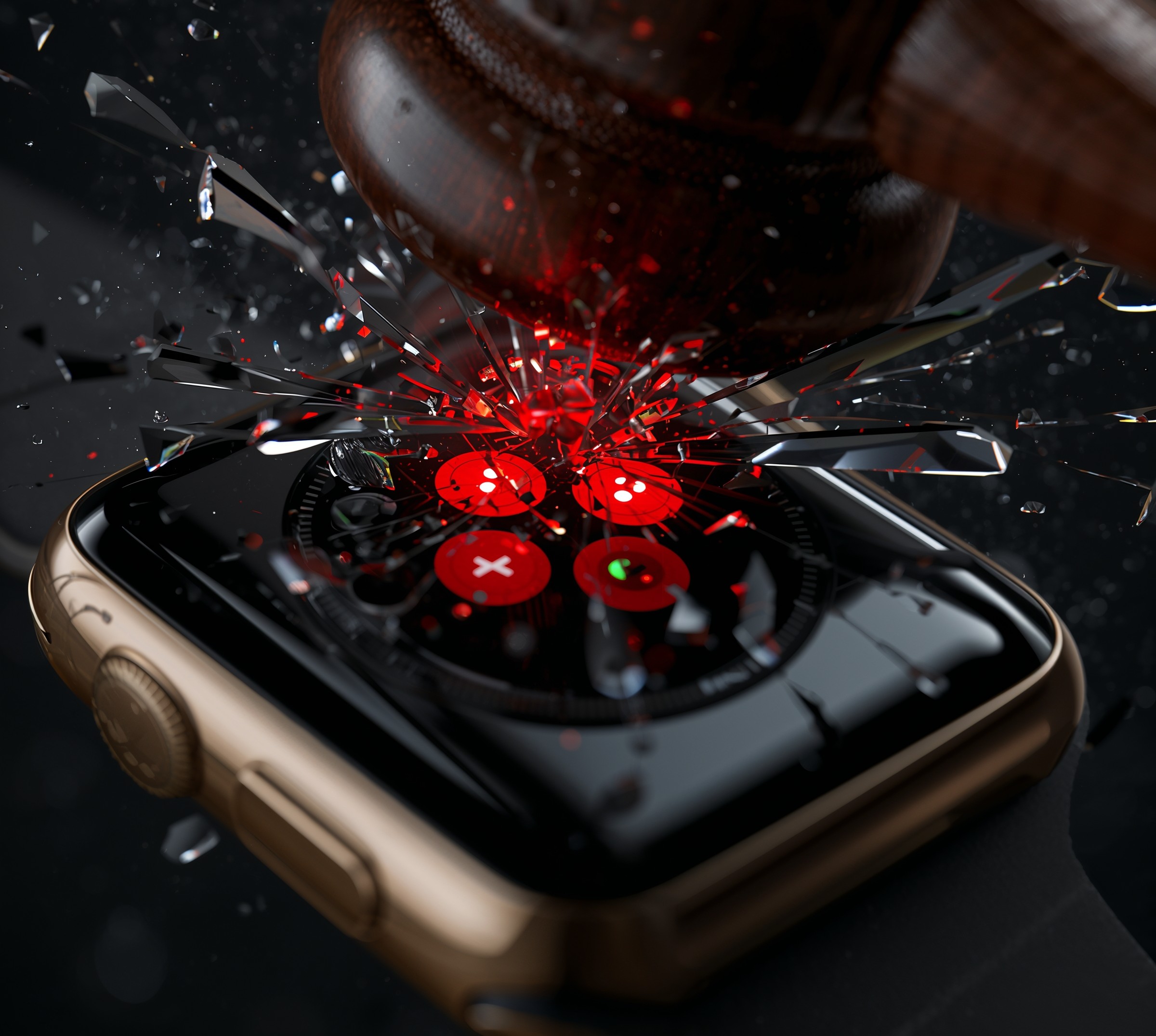
A federal jury in California ordered Apple to pay 𝗠𝗮𝘀𝗶𝗺𝗼 $𝟲𝟯𝟰 𝗺𝗶𝗹𝗹𝗶𝗼𝗻 after finding that Apple Watch blood-oxygen features infringed a Masimo pulse oximetry patent. Consequently, the verdict marks one of the largest consumer-tech patent awards in the district and injects fresh momentum into a yearslong legal fight over health-monitoring technology in wearables. Therefore, both companies now move from trial strategy to appeal posture, while regulators and competitors watch closely.
𝗣𝗮𝘁𝗲𝗻𝘁 𝗮𝘁 𝗦𝘁𝗮𝗸𝗲, Pulse Oximetry and “Patient Monitor” Status
Masimo’s case centered on 𝗨𝗦 𝗣𝗮𝘁𝗲𝗻𝘁 𝗡𝗼. 𝟭𝟬,𝟰𝟯𝟯,𝟳𝟳𝟲, which covers aspects of low-power blood-oxygen monitoring. The company argued that Apple integrated its patented pulse oximetry concepts into Apple Watch models, especially through 𝗪𝗼𝗿𝗸𝗼𝘂𝘁 𝗺𝗼𝗱𝗲 and 𝗵𝗲𝗮𝗿𝘁-𝗿𝗮𝘁𝗲 𝗻𝗼𝘁𝗶𝗳𝗶𝗰𝗮𝘁𝗶𝗼𝗻𝘀. Consequently, Masimo framed the Apple Watch as a “patient monitor” under the patent’s language, not just a fitness gadget. Therefore, jurors needed to decide whether a consumer smartwatch that offers blood-oxygen readings and detects high heart rates fits that definition in a legal, not just marketing, sense.
𝐃𝐚𝐦𝐚𝐠𝐞𝐬: 43 Million Watches and a Per-Unit Price Tag
The jury ultimately agreed with Masimo’s view and concluded that Apple incorporated infringing pulse oximetry features into roughly 𝟰𝟯 𝗺𝗶𝗹𝗹𝗶𝗼𝗻 Apple Watch units sold between 2020 and 2022. Consequently, they set damages at $634 million, a figure that aligns with the lower end of Masimo’s proposed royalty range. Apple argued for a far smaller award in the low single-digit millions; however, jurors accepted Masimo’s framing of both the technical overlap and the commercial impact. Therefore, the verdict assigns a meaningful per-device cost to the contested blood-oxygen functionality.
𝗔𝗽𝗽𝗹𝗲’𝘀 𝗣𝗼𝘀𝗶𝘁𝗶𝗼𝗻: Expired Patent and Plans to Appeal
Apple publicly disagrees with the decision. The company emphasizes that the patent, which covers older monitoring techniques, 𝗲𝘅𝗽𝗶𝗿𝗲𝗱 𝗶𝗻 𝟮𝟬𝟮𝟮 and that courts or examiners knocked out many other Masimo patent claims over the years. Consequently, Apple presents the verdict as a narrow finding on a single, historic patent rather than a broad condemnation of its health-sensor roadmap. Therefore, Apple plans an appeal that challenges both infringement and damages, while it keeps pushing newer watch models and revised implementations into the market.
𝐌𝐚𝐬𝐢𝐦𝐨’𝐬 𝐍𝐚𝐫𝐫𝐚𝐭𝐢𝐯𝐞, Protecting Pulse Oximetry Innovation
Masimo describes the outcome as 𝗮 𝘀𝗶𝗴𝗻𝗶𝗳𝗶𝗰𝗮𝗻𝘁 𝘄𝗶𝗻 in its push to protect clinical-grade pulse oximetry innovations. The company has long argued that it pioneered core techniques that make reliable oxygen-saturation readings possible on constrained devices, then watched a much larger rival integrate similar capabilities into mass-market wearables. Consequently, Masimo presents this verdict as validation that its IP still matters after years of litigation, ITC filings, and trade-secret claims. Therefore, the company signals that it will continue to defend its portfolio aggressively, especially in consumer and prosumer health devices.
𝗕𝗮𝗰𝗸𝗴𝗿𝗼𝘂𝗻𝗱: A Yearslong Apple Watch Health-Sensor Dispute
The verdict does not appear in a vacuum. Masimo’s clash with Apple stretches back to 2020, when the health-tech firm sued over alleged employee poaching and misuse of oximetry know-how in Apple Watch models. Consequently, Masimo painted a picture of talent acquisition followed by rapid patent filing and product integration around pulse oximetry. Meanwhile, Apple insisted that it pursued blood-oxygen features through its own R&D and challenged Masimo’s patents at the US Patent and Trademark Office. Therefore, both sides built a dense litigation history long before this particular jury even heard opening arguments. Wikipedia
𝐈𝐓𝐂 𝐀𝐧𝐠𝐥𝐞, Import Bans, Feature Removals, and Redesigns
Regulators also play a central role. In 2023, the US International Trade Commission concluded that certain Apple Watch models infringed Masimo patents and issued an import ban on blood-oxygen enabled devices such as Series 9 and Ultra 2. Consequently, Apple briefly halted sales and removed blood-oxygen functionality from affected watches in the United States. Later, Apple introduced a redesigned measurement implementation that US Customs cleared for import. Masimo, however, challenged that approval in court and argued that Customs effectively created a loophole in the ITC exclusion order. Therefore, the ecosystem now juggles jury verdicts, trade rulings, and customs decisions that may evolve in parallel with this new damages award.
𝗪𝗵𝘆 𝗧𝗵𝗶𝘀 𝗩𝗲𝗿𝗱𝗶𝗰𝘁 𝗠𝗮𝘁𝘁𝗲𝗿𝘀 𝗕𝗲𝘆𝗼𝗻𝗱 𝗢𝗻𝗲 𝗣𝗮𝘁𝗲𝗻𝘁
This case highlights how health-monitoring features turn consumer gadgets into regulatory and legal flashpoints. Blood-oxygen sensors, heart-rate notifications, and workout modes blur boundaries between wellness and clinical monitoring. Consequently, courts and regulators now decide whether a device behaves enough like a “patient monitor” to trigger stricter patent interpretations and oversight. Therefore, every smartwatch maker, fitness tracker vendor, and sensor supplier needs to consider how patent portfolios, standards, and clinical claims intersect with consumer features.
Moreover, the verdict underscores how supply-chain and product decisions depend on IP strategy, not just engineering. When an import ban hits, companies cannot simply push a software update and move on; they need credible redesigns, regulatory approvals, and, in some cases, settlement options. Consequently, in-house counsel and product leaders must treat health-sensor innovation as a joint legal-technical program rather than an isolated feature sprint.
𝐈𝐦𝐩𝐥𝐢𝐜𝐚𝐭𝐢𝐨𝐧𝐬 𝐟𝐨𝐫 𝐖𝐞𝐚𝐫𝐚𝐛𝐥𝐞𝐬 𝐚𝐧𝐝 𝐇𝐞𝐚𝐥𝐭𝐡 𝐓𝐞𝐜𝐡
Wearable vendors increasingly rely on metrics like blood oxygen, heart variability, and sleep stages to differentiate their devices. However, this verdict shows that pulse oximetry and related signal-processing techniques sit in dense patent thickets. Consequently, late entrants who copy successful feature sets without deep patent diligence face significant retroactive costs. Therefore, smaller players might favor licensing deals or white-labeled sensor stacks from established med-tech firms instead of building everything in-house.
For hospitals and clinicians, the ruling reinforces the commercial value that Masimo and similar companies attach to validated sensor technology. Meanwhile, consumers mainly care about whether features remain available, which means that legal outcomes can influence what watch they buy and what capabilities it offers in their region. Consequently, health systems that integrate device data into care pathways should track legal developments alongside regulatory approvals.
𝗢𝗽𝗲𝗿𝗮𝘁𝗶𝗼𝗻𝗮𝗹 𝗧𝗮𝗸𝗲𝗮𝘄𝗮𝘆𝘀: What Product and Legal Teams Should Do
Technology companies that ship health-related sensors should first map their critical features against existing patents, standards, and clinical claims. Next, they should align IP, regulatory, and engineering teams around a single view of risk. Moreover, they need contingency plans: alternate suppliers, fall-back feature sets, and communication templates for customers if legal outcomes force rapid changes. Therefore, this verdict serves as a case study in why IP strategy belongs in product roadmaps, not just in legal filings.
FAQs
Q: Does this verdict mean Apple must immediately remove blood-oxygen features from current Apple Watch models?
A: The verdict addresses damages for past infringement tied to a specific patent. Therefore, it does not automatically remove current features, especially since Apple already introduced redesigned implementations during earlier ITC proceedings.
Q: Can the $634 million award change on appeal?
A: Appeals can reduce, increase, or uphold damages, depending on how higher courts view infringement findings and legal instructions. Consequently, both sides now face another multi-year phase of briefing and argument rather than a quick resolution.
Q: Why did jurors focus so much on “patient monitor” status?
A: The patent language and Masimo’s argument relied on whether the Apple Watch functions as a patient monitor. Therefore, that classification helped determine whether the patented techniques apply to a consumer smartwatch with health features.
Q: What should other wearable makers learn from this case?
A: Vendors should treat health-sensor IP as strategically critical, run thorough freedom-to-operate analysis, and plan for regulatory scrutiny. Moreover, they should design features and marketing language with patent landscapes and clinical claims in mind.