





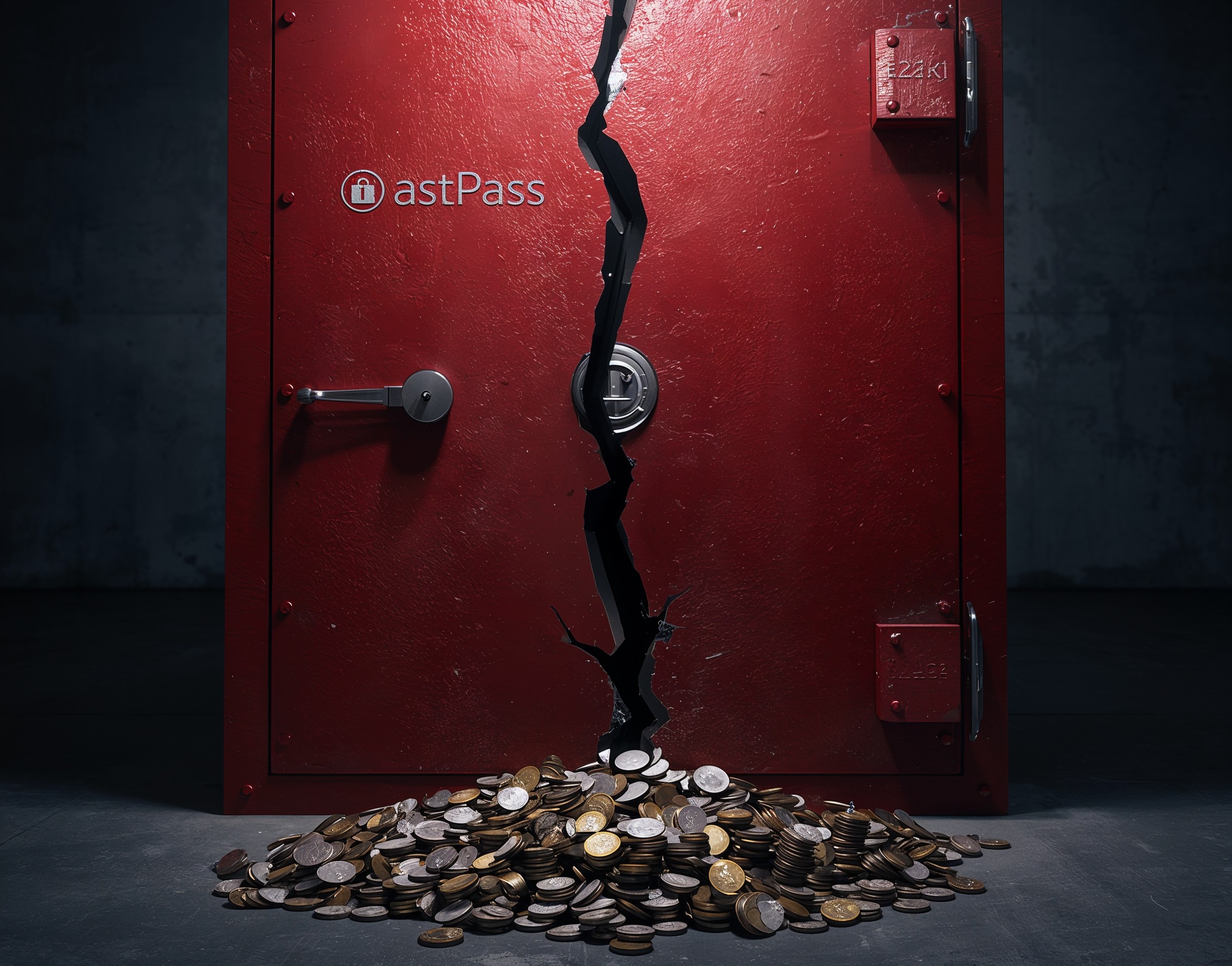
The UK Information Commissioner’s Office issued a significant financial penalty against LastPass after its 2022 breach exposed sensitive vault metadata belonging to approximately 16 million users. Although attackers did not decrypt users’ actual vault contents, the exposed data included metadata that could still help threat actors build targeted intrusion paths. Because this breach originated from unauthorized access to backup storage, investigators emphasized that LastPass failed to apply appropriate controls to protect sensitive customer information, despite repeated warnings within the company that stronger safeguards were needed.
The attackers gained entry by compromising a developer account, pivoting into backup storage systems, and exfiltrating encrypted vault data. Even though encryption protected passwords, vault metadata such as URLs associated with stored credentials was accessible. Consequently, attackers could map a user’s online footprint, making it easier to craft targeted phishing and credential-harvesting campaigns.
Why the ICO Imposed the LastPass Data Breach Fine
The ICO determined that LastPass did not maintain adequate security practices to prevent unauthorized access to highly sensitive data. LastPass confirmed that the threat actor spent weeks inside the environment, repeatedly transferring data and probing for weaknesses. Because the company stored backup data in a separate third-party cloud environment, investigators found gaps in monitoring, credential management, and segregation of privileged access.
The LastPass data breach fine reflects a broader regulatory stance: companies responsible for safeguarding sensitive user information must detect anomalous activity more quickly and apply stricter controls around encryption keys, backup storage, and privileged accounts. Additionally, regulators highlighted that LastPass did not apply sufficient safeguards to reduce the impact of leaked data, particularly in environments where vault metadata can enable follow-on attacks.
Impact on Customers and Long-Term Security Risks
Although encrypted passwords remained intact, metadata exposure significantly increases risk. Attackers gained insights into which services users had accounts on, whether passwords were reused, and which platforms might offer easier entry. Since millions relied on LastPass for centralized credential storage, the breach created widespread uncertainty about password-manager trustworthiness.
Furthermore, this incident reinforced how attackers adapt quickly. They increasingly target backup storage, employee endpoints, and cloud environments because organizations may not enforce the same rigorous controls in those areas. The LastPass data breach fine underscores how critical it is to treat all storage locations including backups and third-party infrastructure, as equal components of a high-risk attack surface.
What Organizations Should Learn From the Breach
Because attackers exploited credential weaknesses and visibility gaps, organizations should review every stage of their operational security:
-
Strengthen access controls to prevent credential theft and session hijacking
-
Apply strict privilege boundaries to limit lateral movement
-
Monitor cloud environments for unusual access patterns
-
Store backups with the same rigor applied to production environments
-
Enforce strong MFA across all developer and administrative accounts
-
Test for metadata leakage when designing data-storage models
These steps help reduce exposure when attackers bypass initial defenses. Additionally, teams must establish continuous monitoring pipelines that track anomalous downloads, administrative actions, or backup storage access.
ICO’s Message to the Industry: Data Protection Obligations Cannot Be Ignored
The ICO stressed that password-management services hold some of the most sensitive user information possible. Because customers rely on these platforms to secure access to banking, work accounts, cryptocurrency platforms, and healthcare systems, the threshold for acceptable risk is extremely low.
By issuing the LastPass data breach fine, UK regulators signaled that companies cannot rely solely on encryption as a risk-mitigation strategy. Instead, they must implement layered defenses, ensure rigorous monitoring, and maintain internal processes that detect unauthorized access quickly. Organizational blind spots, especially in cloud storage or backup handling, can create severe consequences for millions of people.




One thought on “UK issues major LastPass data breach fine following 2022 incident”