




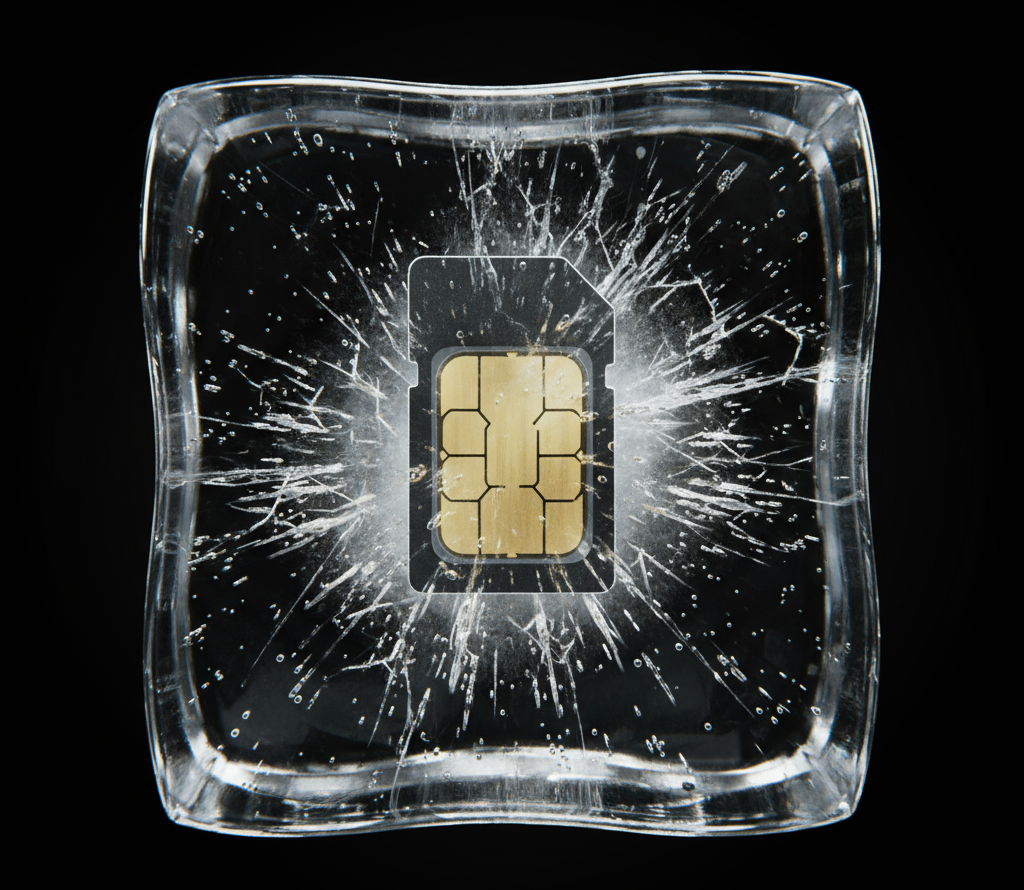
Russia now applies a 24-hour SIM “cooling-off” window after a subscriber returns from international roaming or after a SIM stays inactive for 72 hours. Consequently, mobile data and SMS stop while networks verify identity and risk signals tied to 𝐝𝐫𝐨𝐧𝐞 𝐦𝐢𝐬𝐮𝐬𝐞 near borders. Therefore, travelers and idle users should expect a full day without cellular data or texting after the trigger event, even though voice service typically remains available. Moreover, operators coordinate a staged restore once checks complete.
𝗪𝗵𝗮𝘁 𝗧𝗵𝗲 𝗥𝘂𝗹𝗲 𝗗𝗼𝗲𝘀, Triggers, Scope, and Duration
Carriers start the 24-hour blackout when a device reconnects to Russian networks after roaming or when logs show three days of inactivity. Consequently, networks block mobile data and SMS during that window. Meanwhile, operators run automated checks and identity verification flows before they release the block. Importantly, the policy targets 𝐟𝐨𝐫𝐞𝐢𝐠𝐧 𝐒𝐈𝐌𝐬 and 𝐫𝐞𝐭𝐮𝐫𝐧𝐢𝐧𝐠 𝐑𝐮𝐬𝐬𝐢𝐚𝐧 𝐒𝐈𝐌𝐬, and some carriers extend enforcement when the device remains idle after the first cooldown. Therefore, subscribers should plan around airport arrivals, border crossings, and long idle periods.
𝐄𝐱𝐩𝐞𝐜𝐭𝐞𝐝 𝐈𝐦𝐩𝐚𝐜𝐭: Travelers, Businesses, and Roaming Workflows
International visitors lose mobile data and SMS for the first 24 hours in country; therefore, they rely on Wi-Fi for apps and messaging. Meanwhile, returning residents face the same pause when they re-enter or when a domestic SIM sits idle beyond the threshold. Consequently, airports, hotels, and enterprises should prepare offline maps, local contact numbers, and check-in procedures that do not require immediate SMS codes. Moreover, help desks should brief staff on the rule so they can set expectations during busy arrivals.
𝗣𝗼𝗹𝗶𝗰𝘆 𝗥𝗮𝘁𝗶𝗼𝗻𝗮𝗹𝗲: Anti-Drone and Anti-Abuse Objectives
Authorities link the cooling-off period to 𝐝𝐫𝐨𝐧𝐞 𝐭𝐡𝐫𝐞𝐚𝐭 𝐦𝐢𝐭𝐢𝐠𝐚𝐭𝐢𝐨𝐧 and to abuse prevention tied to recycled or dormant numbers. Therefore, networks aim to break potential control links and to validate subscriber identity before data resumes. Meanwhile, media and telecom sources describe the policy as a nationwide pilot that carriers started to implement in October, then expanded in November under ministry oversight. Consequently, travelers should expect ongoing adjustments as operators tune automation and exception handling.
𝗥𝗲𝘀𝘁𝗼𝗿𝗮𝘁𝗶𝗼𝗻 𝗣𝗿𝗼𝗰𝗲𝘀𝘀: What Unlocks Your SIM Again
Operators restore mobile data and SMS after the 24-hour window ends and after checks pass. Moreover, some carriers require a quick identity confirmation through an operator channel or a self-service flow. Therefore, users should keep passport or account details ready and should try the operator app or hotline if service does not resume when expected. Meanwhile, periodic inactivity may retrigger the block until consistent usage occurs.
𝐑𝐢𝐬𝐤 𝐌𝐚𝐩, Edge Cases and Service Variability
Travelers report cases where systems failed to auto-lift the block, which forced manual intervention and extended downtime. Therefore, enterprises that depend on SMS for MFA during travel should pre-stage backup factors. Moreover, tourists should download offline maps and translation packs before arrival and should store booking codes locally to avoid lockouts while the SIM cools. Consequently, teams should monitor carrier advisories as enforcement matures.
𝗚𝘂𝗶𝗱𝗮𝗻𝗰𝗲 𝗳𝗼𝗿 𝗧𝗲𝗰𝗵 𝗧𝗲𝗮𝗺𝘀, Minimize Operational Friction
Companies with staff who cross into Russia should brief travelers, issue eSIMs with staged activation, and enable app-based authenticators that work offline. Moreover, support teams should document Wi-Fi fallbacks, voice call alternatives, and delayed SMS flows. Therefore, security teams should review conditional access rules so cooldown-affected logins do not trigger false positives or lockouts.
𝗚𝘂𝗶𝗱𝗮𝗻𝗰𝗲 𝗳𝗼𝗿 𝗧𝗿𝗮𝘃𝗲𝗹𝗲𝗿𝘀: Practical Prep Steps
Travelers should download offline navigation and translation packs, print or save QR codes for transit, and pre-authorize key apps for offline use. Meanwhile, they should capture hotel contacts and airport transfer details locally. Consequently, first-day logistics continue smoothly while data and SMS remain paused.
𝗙𝗔𝗤𝘀
Q: Does voice calling work during the 24-hour cooling-off period?
A: In most reports, voice continues; therefore, users can call support lines or operators while data and SMS remain paused.
Q: What events trigger the 24-hour block?
A: Reconnecting after international roaming or leaving a SIM idle for 72 hours can trigger the block; consequently, the network pauses data and SMS while it verifies identity and risk.
Q: Can the block extend beyond 24 hours?
A: In some cases, restoration required manual intervention; therefore, delays occurred beyond 24 hours until operators cleared the state.
Q: How should travelers prepare?
A: Travelers should rely on Wi-Fi on day one, preload offline resources, and carry backup MFA methods; consequently, they avoid lockouts during the pause.